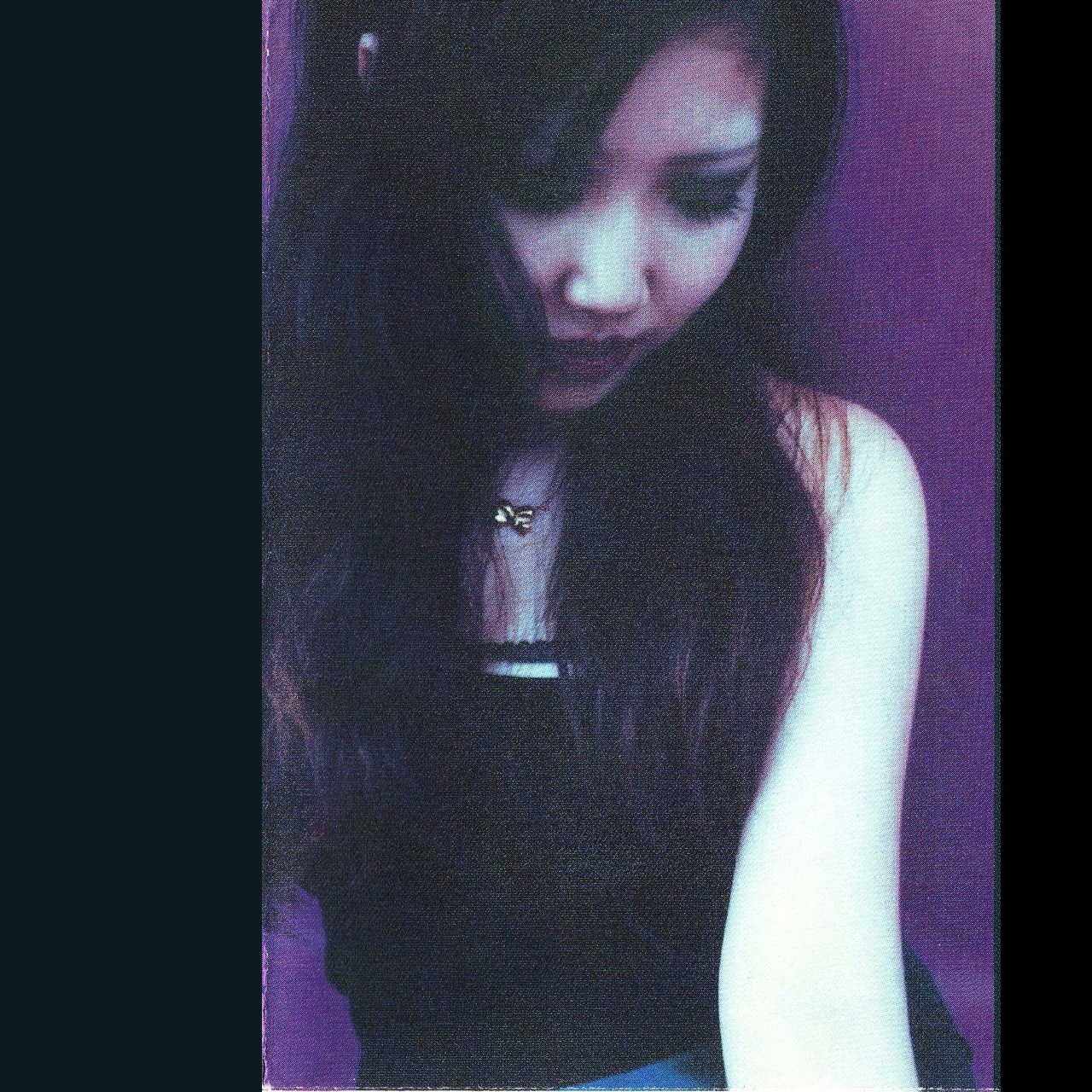
As I bid adieu to summer, a changing season leaves me with a cool breeze hanging in the air and the return of sweater weather threatening my wardrobe. As my mind starts shifting toward music better suited for this change, I find myself wondering: does this mean I should embrace my own “Sad Girl Autumn”? With Miyako Kobayashi’s Lullabye playing in the background, it’s hard for me not to be lulled into that mood.
Released in 1998 on Crue-L Records, Lullabye surely belongs in someone’s imaginary canon of Japanese Sad Girl music. All the telltale signs are there: the waifish young woman on the cover, the gently plucked acoustic guitar at the heart of the record, and vocals sung so whisper-quiet they threaten to evaporate on contact. If any album could slot into a create-your-own mood board of this type, Miyako’s music on Lullabye fits it to a tee.

Yet the more I peel back the layers of Miyako’s world, the more her ideas and mystery reveal themselves in her music. It’s music that doesn’t fall into the tropes of those eager to romanticize female pain.
It’s unfortunate that precious little is known about Miyako herself. In the span of just one year, she released a single, an EP, and Lullabye, her only full-length album. That first EP, Limited., revealed an artist equally influenced by the sing-songbird jazz of vocalists like Blossom Dearie, Beverly Kenney, and Astrud Gilberto, as well as folk singers like Vashti Bunyan, Françoise Hardy, and [insert one of your favorite semi-forgotten singer-songwriter], all of whom shared her gentle, moody disposition, yet also moved by contemporary singers and artists in techno and R&B scenes.
On songs like “One Sunny Afternoon” and “Youth Is Limited,” aided by the production of Crue-L founders (and future Being Borings members) Kenji Takimi and Tomoki Kanda, you can hear Miyako shaping a kind of neo-acoustic sound. It has its roots in an original “sad girl” aesthetic, but it’s reworked through ideas inspired by neo-soul and club music.
You can hear echoes of this in the Lolita-esque sound of her Crue-L labelmate, Kahimi Karie. But while Karie’s music often leans into affectation, Miyako takes things further away on her next release. “Sing Me A Lullabye,” the single that foreshadowed her debut, stretched past seven minutes—a plaintive acoustic ballad blossoming into something else entirely, as Tomoki Kanda added dub-inflected touches and a slightly psychedelic atmosphere and Miyako appeared to take some vocal inspiration from more atmospheric urban singers like Janet Jackson and Aaliyah or of alt-rock singers like Bilinda Butcher and Sarah Cracknell, and those on the Cherry Red record label, to name precious few. Beneath all this texture was a nostalgic, almost wholesome song. Pining for the summer of 1995, Miyako sings not of missing a man, but of missing a fleeting summer holiday.
Placed on the album, “Sing Me A Lullabye” fades into “One Sunny Afternoon,” an even more languid meditation on nostalgia, focused on finding just the right style for a fading season. Over broken English, Miyako’s barely-there speak-singing floats, sometimes slurs, perfectly above Tomoki’s booming minimalist soul electronics. Together, the two songs introduce Lullabye as a record that’s more cozy than confessional. And when “Typhoon Song” follows, it makes perfect sense.
Lullabye also leaves room for Miyako’s jazz leanings, audible in tracks like “Typhoon Song” and “Tell Me, Tell Me.” Rather than sink into Shibuya-kei rock posturing (as they briefly do on “And Life Goes On…”), Miyako and her collaborators build a distinct sound that anticipates some of the folktronica to come by wisely reshaping some of its past.
Songs like “Walk Like The Wind” are gorgeous and thumping, as if Nick Drake’s spirit had wandered into a techno base—a treat for both folkies and club kids. Miyako’s strength lies in how she carries old-timey emotions into the present, a quality that animates the best of Lullabye. On the bittersweet ballad “What Can I Do For His Freedom?” memories of long-lost lovers dissolve into an insistence on staying present. Darker shades sharpen further in trip-hop experiments like “Kick The Melody.”
The album closes with “Foolish Days,” its striking lyrics overlooked in the English lyric sheet but preserved in Japanese translation:
Now, I’ve come to know it deeply—I’ve realized it… life goes on.
You said that was ridiculous, but—
The wind keeps blowing, and life keeps moving forward.
In this world, I’m someone who wouldn’t really be missed…
but I wonder, what was I to you?
This cigarette, these records, this drink—
they’re all meaningless, foolish little things…
but to me, they’re so dear.
When I’m unbearably lonely, aching from being all alone,
I skip my plans and set out on a small journey.
To the sea, to the old downtown streets, to the world—
anywhere at all.
It’s a perfect reminder that perhaps we all miss something in translation. Between the words we want to say and the words we release into the world, the truest parts sometimes remain hidden. My hope—perhaps yours too—is that with time we’ll uncover more of what lay behind Miyako’s navel gaze. For now, though, her journey ends here. At least we have Lullabye—an impressive statement of intent.