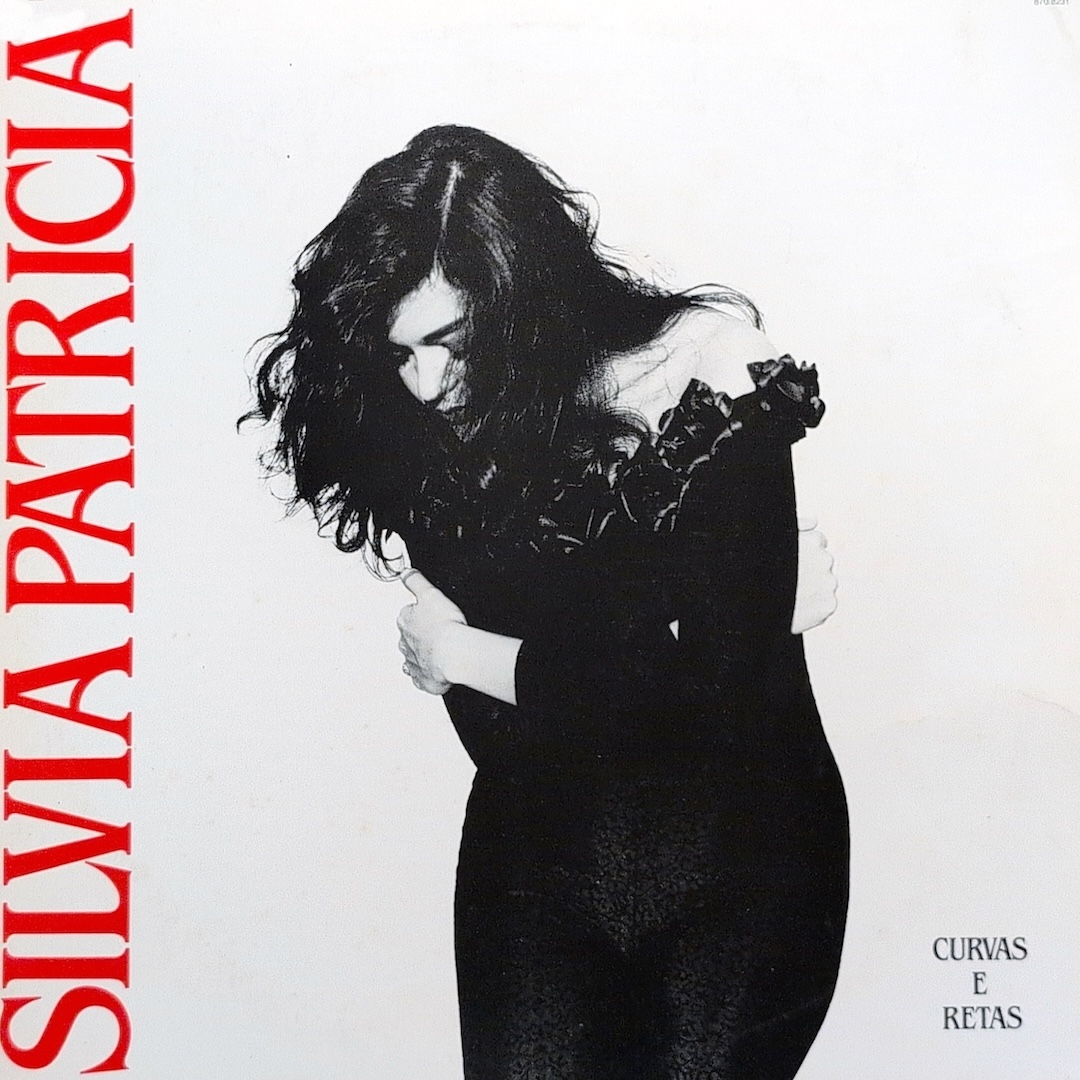
Sometimes the best romance is the one that’s rekindled. As I listen to Sylvia Patricia’s Curvas e Retas, I’m reminded why I can put on some of my favorite Brazilian records and instantly feel at home with them—this is music that cuts straight to what I enjoy. Easygoing yet quietly multi-layered and complex, records like this carry a certain ease that just hits differently. As I restart this other side of the blog, I’m reminded why I took the time before to do so.
Born Sylvia Patricia Cesar Pires Valença on March 21, 1961, in Salvador, Bahia, Sylvia was the youngest of three daughters in a deeply musical family. Her father, Gutembergue de Araújo Valença, was an uncle to the great Pernambuco songwriter Alceu Valença, and her grandmother was part of a touring group of female musicians from Juazeiro, to name just a few of her roots.

An early affinity for music led Sylvia to take piano lessons before settling on the guitar as her instrument of choice, eventually studying composition and conducting at the Universidade Federal da Bahia. In college, her love of music broadened to include production and a growing knowledge of different instruments. By the early ’80s, fresh out of school, she took her first steps into the music industry—signing with RCA in São Paulo and releasing early singles in Bahia under her birth name, like “Stônica,” which fit neatly into the disco-inflected, funky side of MPB (Música Popular Brasileira) prevalent at the time.
It wasn’t until the mid-’80s that Sylvia shifted her tone, embracing an edgier aesthetic influenced by punk and New Wave, closer in spirit to artists like Gal Costa, Caetano Veloso, and others who had helped shape MPB. Moving away from the “regional folk” songwriter mold others had envisioned for her, Sylvia’s 1985 single “Lady Pank” severed ties with that world. At a time when a lucrative contract could mean both livelihood and stability, Sylvia found herself relocating to an apartment in São Paulo’s red-light district.
It was in this period—her time “in the wilderness” as a 20-something—that Sylvia drew inspiration for the vivid imagery she would pour into her songs. Coming into her own as a songwriter, one deeply informed by rock and blues, she declined offers from other labels until she found Epic, a company willing to let her explore whatever sound she wished to make her own. Changing her stage name to Silvia seemed to underscore that break from her past.

On her 1988 self-titled debut, a hard-nosed sound—very Lou Reed-esque—came to the forefront on its lead single, “Cenas de Violência e Tensão.” Sung from the perspective of a transgender sex worker, this track became her signature song, igniting in her the desire to express life in all its gradients. Not exactly rock, nor strictly mainstream MPB, it presented a modern, urbane vision of what MPB could be when it strayed to the wilder side.
Astutely tuning into the evolving axé scene in Bahia, Sylvia incorporated electronic textures and her torrid, distinctive guitar playing whenever the song called for it. Her ability to weave together the prevailing sounds of the era—hard rock, reggae-inflected Bahia grooves, declarative singer-songwriter sensibilities—led to standout tracks like the title cut, “Se Você Quiser,” “Tempos Modernos,” and “Na Memória,” all existing just outside the MPB lineage. Covers like “Noite do Prazer,” an electrified take on Cláudio Zoli & Banda Brilho’s original, showed her willingness to experiment with the familiar. As striking as her debut was, Sylvia’s next record would operate on an even higher plane.

Introduced by the sound of coins scattering on the floor, “Gloria” shifts from proggy pop to sleazy funk, serving as a gateway to the expansive palette Sylvia would soon explore—a kind of table-setting for an artist still eager to take risks. What follows is the gorgeous “Cada Um, Cada Um (Namoradeira),” a reimagining of Ronaldo Barcellos’s original, with an atmospheric, quasi-ambient quality reminiscent of the Stones’ late-period ballads like “Heaven.” Not quite MPB and not quite rock, it’s a jazzy, sunlit reverie full of the mercurial emotional heft so distinctive in Brazilian music.
Curvas e Retas resembles an awakening—Sylvia’s embrace of her own strength and conviction, and the challenges that come with following through. The level of sophistication in songs like “Clima Com o Mundo” and “Olhos Felizes” feels unmistakable. No surprise, then, that tracks like “Mil Pedaços e … Crac!” and the title song became radio hits. With a wall-of-sound production, Sylvia crafted music aimed not just at the front row but the bleachers. Even quieter moments like “Sem Fim” carry a universality that speaks beyond Brazil.
I return often to songs like “Pro Meu Amor (500 Miles),” “Nada Mais (Cara),” and “Todas as Mulheres do Mundo”—personal, intimate tracks that showcase the full scope of Sylvia’s talent. On Curvas e Retas, there’s a sense of larger buy-in—both in studio resources and in compositional ambition. Released at a time when many contemporaries were getting lost in the sheen of early-’90s smoothness, Sylvia’s sophisticated pop sound felt tailor-made for audiences weary of nondescript acts. This was adult music unafraid to sound contemporary.
As I groove to the windswept boogie of “Digitais” and reflect on the Caetano Veloso-assisted “Cantar,” I’m reminded of other works from the same era—Caetano’s own Circuladô, Marina Lima’s 1991 self-titled album, and a year later Suzanne Vega’s 99.9 F°—records that share a throughline with Sylvia’s Curvas e Retas. These albums don’t smash the past but instead chart an alternative path forward. In their quieter moments, they are portraits showing the luxury in choosing your battles and winning certain fights, in the end, finding a way to correct the course—even if others don’t yet see/appreciate exactly where you’re heading. For now, we have Curvas e Retas as a reminder of Sylvia’s way forward, if we chose to follow her lead…