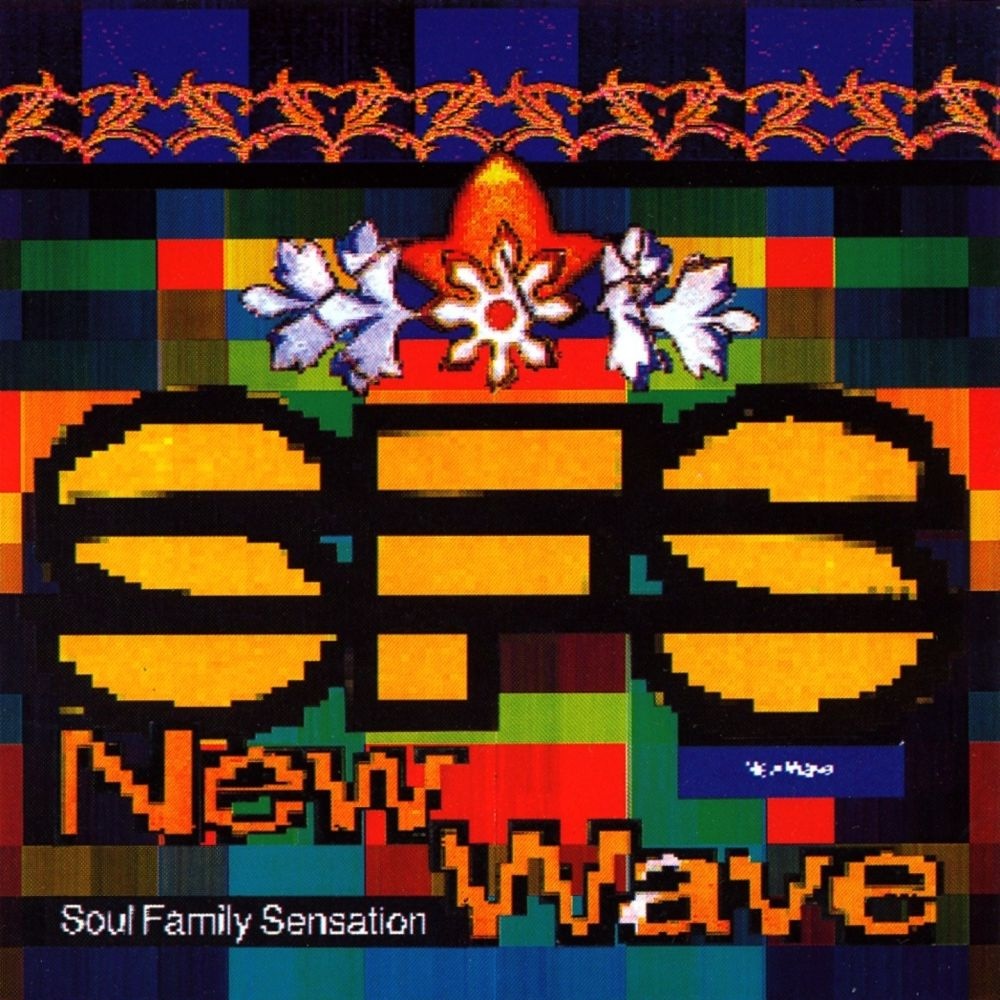
Call me a hopeless romantic, but I have a strange fascination with music from bands that sound like they overshot their inspiration. As I listen to Soul Family Sensation’s New Wave, I can’t help shaking the feeling that, had they arrived just a few years later, they might have enjoyed far greater success in their native United Kingdom–and stretched their influences and ideas further into that great cultural sink we call America.
Soul Family Sensation was the short-lived brainchild of Manchester-adjacent musicians Jonathan “Johnny” Male and Guy Batson, who convinced Jackson, Mississippi-born soul singer Jhelisa Anderson to join their band–jettisoning an early singer-songwriter career, backed by one famous guitarist you may all know, Jeff Buckley–for this creative sojourn in England, where sonic atmospheres were further shaped by keyboardist Petar Zivkovic.

Under the spell of the nascent acid jazz scene, and taking inspiration from homegrown artists like Soul II Soul and Neneh Cherry, as well as Chicago’s house scene, they signed with One Little Indian (best known as the early home of Björk, along with artists like Kitchen of Distinction) in 1989 to work on what would become New Wave. Recording sessions were held in London, where lead single “I Don’t Even Know If I Should Call You Baby” first put their intentions to tape.
It would be that single–released in myriad multicolor versions–and its accompanying video that made them a short-lived chart sensation, peaking just outside the Top 40. By marrying these bubbling scenes–Madchester, downtempo, early trip hop–into a multi-ethnic, multicultural band unafraid to present themselves as such, the song became that rare buzz single: equally at home in clubs, on the radio, and across local sound systems, cutting through much of the noise of the early ’90s UK dance scene.

What I find most fascinating is how Soul Family Sensation’s full-length debut refused to pigeonhole them into any single sound. New Wave‘s opener, the baggy “Perfect Life,” bears little resemblance to the following track, the sterling downtempo “Messed Up and Blue,” which showcases Jhelisa’s wonderful pipes alongside Johnny’s own vocals. The dubby, spacey ambient techno of “The Sheffield Song” transports their sound to the shores of Ibiza and other cosmic elsewheres, tipping its hat to like-minded acts such as Cabaret Voltaire, who had paved similar paths on albums like Groovy, Laidback and Nasty.
Recorded at London’s Orinoco Studios–where, yes, Enya recorded her own masterpiece Watermark, and A.R. Kane attempted to push dream pop into dream house–Soul Family Sensation’s vision of a new UK hippy soul likewise draws from that evolving “house sound.” Tracks like “Japanese Technology” feel almost divorced from any lingering ’80s influence, aligning instead with more contemporary soundcraft, blending electronic atmospheres with inward-looking lyrical exploration.
Released prior to Primal Scream’s Screamadelica, it’s difficult to understand how New Wave wasn’t swept up in that same cultural wake. Certain tracks–“747 Tonight,” in particular–feel perfectly suited to festival fields. Yet it may have been the band’s very willingness to be playful and stylistically diverse that led to their quiet disappearance from our collective memory. Songs like the urbane, soulful “Who Ever Said” don’t slot neatly into an alternative radio playlist.
In hindsight, for all my belief that Soul Family Sensation predicted a music of the future, perhaps that same malleability led to their demise. Were they BBC Radio 2-ready, or more BBC Radio 4? You can imagine radio programmers debating where to place singles like the trance-leaning “Other Stuff” or the adult contemporary-tinged “The Day You Went Away.” In a pre-internet age, it’s easy to imagine audiences unsure of quite what they’d picked up at their local record store.

Perhaps that’s where I should leave the review and ask you what you think. Can you imagine Soul Family Sensation emerging years later, when Johnny’s better-known band Republica–another buzz-bin relic–was lighting up the charts? Would their music sound just as impressive, or simply fit in? Divorced from its time, I still believe their sound and aesthetic offer something enduring and unique, something quietly inspirational.