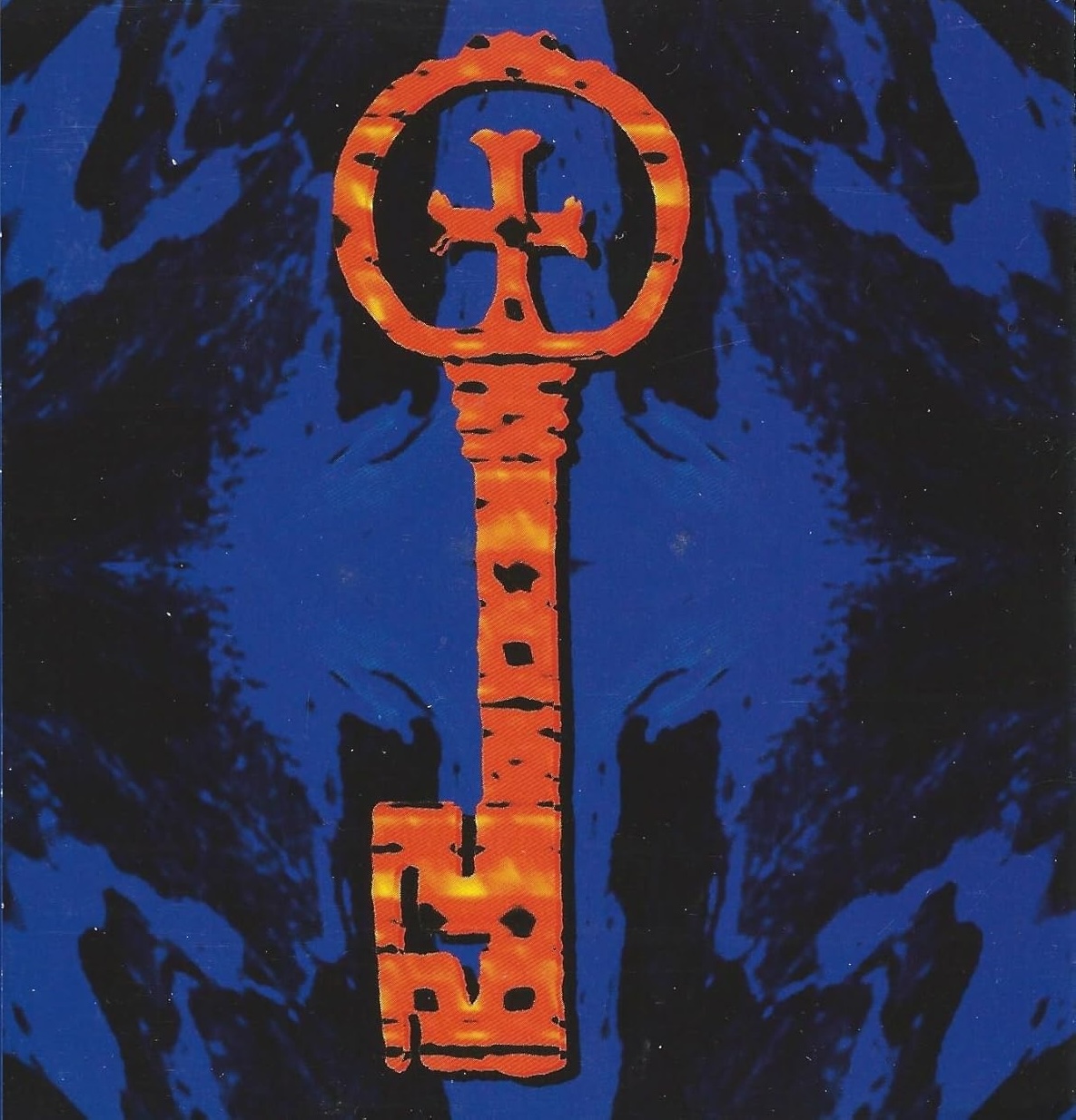
I believe that the art of a perfect remix lies in realizing that its intended audience wants to imagine the original track existing, in spirit, in a different context. After one listen to Tōzokudan’s King Of Mix, one can imagine every remixer took this idea to heart. If one knows the source material, it’s impressive that such ideas were able to land as clearly as they do.
If you’re anyone with a working knowledge of contemporary Japanese music, you’ve likely heard the name The Blue Hearts. Founded in Shibuya, Tokyo, in the mid-’80s by vocalist Hiroto Kōmoto and guitarist Masatoshi Mashima, it was their vision of homegrown artistic rebellion that spiraled into the creation of one of the most influential, aggressive, confrontational, and popular punk bands on that side of the world.

Through songs like “Linda, Linda” and “Train, Train,” The Blue Hearts established a certain image–derivative of first-wave punk groups like The Clash, The Ramones, and The Sex Pistols–that helped spur a boom in like-minded scenes (skating, fashion, and more) once held just below the surface of the Japanese rock underground. Albums like their self-titled 1987 debut and Young and Pretty justifiably remain totems of Japanese pop punk for a reason. Yet by the early ’90s, for all their success, one could hear on records like Blast Off! and Dug Out a group that had run out of ideas, living on more as an institution than as a creative force.
What makes 1994’s King Of Mix so audacious is that, in your fair author’s opinion, it feels like the fitting final statement The Blue Hearts wanted to make.

One wishes there were some history written in their native tongue outlining why The Blue Hearts decided to commission a remix record. Rather than thinking of it as a compilation of other artists lending their time to reimagine their oeuvre, The Blue Hearts conceived of a made-up group they dubbed Tōzokudan, or 盗賊団 (Band of Thieves). The name was inspired by their artist agency and by the Southern All Stars’ club-storming remix of their hits by Z-Dan on the “江ノ島 Southern All Stars Golden Hits Medley” 12-inch.
At the heart of this album was the realization that original Blue Hearts songs were already being spun at nightclubs by leftfield DJs. One day, their agent and producer Yu Imai had a simple thought: why not get professional remixers to do the heavy lifting and remake these tracks specifically for the club? Somehow, this idea was put to a vote with their fans via a newsletter. What began as a 50/50 split arguing for or against it became a 100% idea the band members ultimately got behind.
What’s impressive is that what could have landed as a wet flop of a remix project instead resulted in a set of genuinely compelling creations, giving listeners a peek into the burgeoning Japanese electronic dance scene. Although the original CD release didn’t clearly state who remixed or played on what, the information it did provide centered on who was responsible for the mixes. From Japan, established names like Masahide Sakuma, Dub Master X, and Yasuharu Konishi (of Pizzicato Five) traded grooves with upstart dance DJs like Confusion’s CMJK and F/S fave Yukihiro Fukutomi, as well as hip-hop producers like Illicit Tsuboi. From elsewhere, we get names like Carter USM and Matt Howe. Still, the backbone of the record–seven of its fourteen tracks–was co-produced by Yukihiro Fukutomi.
It’s Yukihiro who kicks off the record with his inventive reimagining of The Blue Hearts’ “Dance Number,” transforming a two-minute Ramones-style blitzkrieg bop into a thumping four-minute trance bump. Whoever commanded “チェルノブイリ (Hyper-Drived Mix),” a remake of “Chernobyl,” did a masterful job of fusing its Stooges-like urgency with the pulsing mechanics of jungle music, sounding like something out of Primal Scream’s Exterminator (XTRMNTR).
Yasuharu Konishi, seemingly, contributes the spacey, dubbed-out dancehall remix of “Train, Train,” giving Hiroto’s original vocals that little extra something the original kept hidden in its heart. Other dubbed-out techno tracks–like what I believe is Dub Master X’s transformation of “Aozora” into “青空 (Blue Bus Mix)”–point to this album landing as an update to Sandinista! by The Clash, except this time the once-unfairly maligned dub side is taken as inspiration for The Blue Hearts’ newfound antagonistic edge for a new age.
I don’t know about you, but I think there’s something wonderful about there existing a world where a remix of The Blue Hearts’ sleepy, rootsy “Yūgure” becomes a more compelling house track, “夕暮れ (House Mix).” Once again, full credit to Yukihiro for sussing out something hidden in the original.
In many ways, King Of Mix plays like a kiss-off to the scene The Blue Hearts helped birth. In the most punk way possible, it’s upfront about what could be the next counterculture. You hear it on tracks like “キスしてほしい (Sleepless Mix)” and “少年の詩 (Japanese Psycho Mix)”–here are the hits you know and love, two sides of the same coin, laid bare alongside music you should be shifting your attention to.
In the end, who knows the complete reason The Blue Hearts allowed themselves to be vulnerable and subjected their work to the remix treatment in this way? What remains is an album where those closest to the original source material assumed the worst and were pleasantly surprised by what others brought to the table. Somewhere beneath their rough exterior, others were able to dig deeper, sussing out new places their inspiration could go. I imagine it like a piñata, sometimes you’ve got to give things a good whack to get to what they’re really hiding inside.