I’ll make this argument: if one wants to understand an aspect of “Japanese” sensibility, one must experience the tea ceremony — sadō or chadō. Deeply influenced by Zen Buddhist practice and grounded in four principles — harmony (wa), respect (kei), purity (sei), and silence (sabi) — every movement and interaction with the tea is meant to inspire a certain mindfulness and appreciation for the moment one is experiencing.
Calm and reflective, seasonal in nature, the tea ceremony emphasizes form over efficiency, embodying the idea of wabi-sabi — the beauty of imperfection and impermanence. What you’re experiencing now is both profound and ephemeral. It’s this spirit — shaped by the atmosphere of Kyoto — that inspired its most influential proponent, Sen no Rikyū, to fashion a ritual that fused spiritual belief with aesthetic practice. From that, schools were formed, traditions codified, and the simple act of sitting down for a cup of tea — in a temple, on the balcony of a garden, in a tearoom, on a tatami mat, in a dining chair, or on a picnic blanket — became something transformative.

And now, many moons and seasons later, centuries removed from the Sengoku period, that same spirit would inspire a Kyoto-centered record label to release music that expresses itself in that same air.

In 1999, two Tokyo-based musicians — Kenichiro Hoshi and Masaaki Takemura (otherwise known as Cinq) — met while collaborating with Wakayama-based animator Koji Morimoto (of Akira and The Animatrix fame). They began to toy with the concept of creating an アンビエント茶会 — an “ambient tea gathering.” At first, they conceived of becoming a kind of “tea house” record label.

Trapezing their electronic instruments between Kichijōji and Kyoto, they joined up with Kyoto-based musician Ken’ichi Itoi to perform their ambient compositions at events hosted by local cafés and coffee shops — closer to the cultural source that had inspired them. These so-called “Sakura Chillout” events (サクラチルアウト) led them to found the Ryōon-dō Tea record label and launch shows on Kyoto FM stations to share their uniquely inspired sound. The goal? To create a kind of music that could exist — and be accepted — in places steeped in history and tradition.

It wouldn’t be until 2003 that Ryōon-dō Tea would find its long home at Hōnen-in, a moss-covered Buddhist temple with signature seasonally-changing manicured sand beds, quietly hidden not far from Kyoto’s must-walk Philosopher’s Path, at the foothills of Mt. Nyoigadake. Named after Hōnen, founder of the Pure Land school of Buddhism, the temple’s peaceful confines — just beyond the busiest parts of Kyoto — have become a discreet hub for art, craft, and music, where the past attempts to give space to evolution and change. It’s here that Ryōon-dō-invited artists continue to perform in spaces that echo with time.
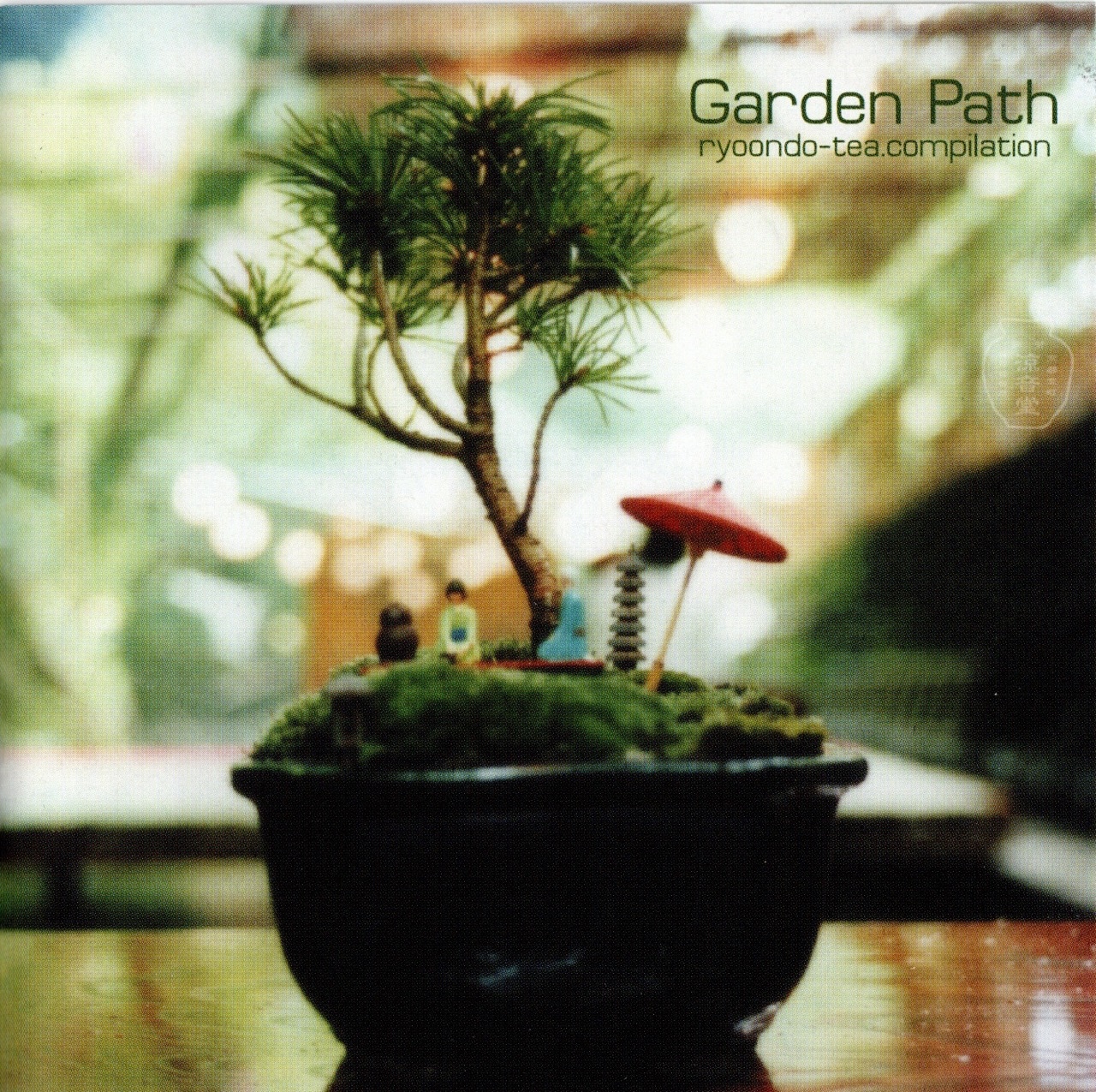
This is why I believe their first compilation, 2000’s Garden Path (Ryōon-dō Tea Compilation), serves as a perfect entryway into the Ryōon-dō world. On this release, Hoshi invited a collection of artists — from Kyoto and beyond — who could share a particular sensibility. You hear it in the opening track: Cinq’s sparkling ambient techno piece “spillover,” a relaxed, bubbling dance track that invites both meditation and movement. Takafumi Ishikawa (aka ISI) follows with “bien perde la canscience,” a panoramic ambient meditation perfect for chilling out. Yuichiro Kimura (aka Medicine Quartz), who would return on future compilations, contributes “Meta Intuition 1,” a sumptuous spiritual drum-and-bass piece that thrives in the lower frequency range.
On Ryōon-dō Tea’s first release, Ongaku’s Asian Polyrhythm Dance, the album explored how to combine seemingly disparate influences — otaku subculture, traditional Japanese ongaku, the minimalism of Steve Reich and Tōru Takemitsu, side-scrolling video game soundtracks, Roland grooveboxes, and a kind of wabi-sabi-delica — into a higher idea:
Zen + Ambient = Zenbient.
This “zenbient” music — designed to exist in timeless spaces — permeates tracks like “Doubble Happines (Overlevel Radio Show)” by Quiet Mode (an alias of Hoshi and Ken Hayashi). What remains impressive about the compilation is how other musicians — from labels like Daisyworld and FORM@t Records, artists operating under pseudonyms like Riow Arai, and newcomers like Miroque — all seemed to intuitively understand what Ryōon-dō was aspiring toward.
Background music for tropical nights. A companion to your air conditioner.
With ambient tones, tea-inspired vibes, and a touch of playful charm, this is a cool, cool gem for chilling out. A contemporary “tea ceremony in sound” — and Ryōon-dō’s little-known landmark statement.
Now, 20-odd years later, I find it a perfect inner soundtrack for traveling a different kind of path — one outlined in the original liner notes to this music.

On the cover of Garden Path (Ryōon-dō Tea Compilation), it speaks of a small world that lives inside the practice of another adjacent practice, that of ikebana, and is conceived within the stillness of a bonsai container. Inside the album are images shaped from places like Uji (the de facto capital of ceremonial-grade matcha), Daitoku-ji, Tenkawa Benzaiten-sha in Nara, Toyokawa Inari, and even unnamed places — family-run tea rooms, tsubo-niwa (pocket gardens in machiya, Kyoto’s traditional townhouses), and a komorebi, found amongst groves of black bamboo.

It’s a whole life’s journey — if one chooses to walk it — inspired by something as simple as these instructions:
“Pour hot water over the matcha powder.
Whip the mixture with a chasen (tea whisk) until it becomes frothy.”
A certain wabi-sabi.
A certain whisk, whisk.