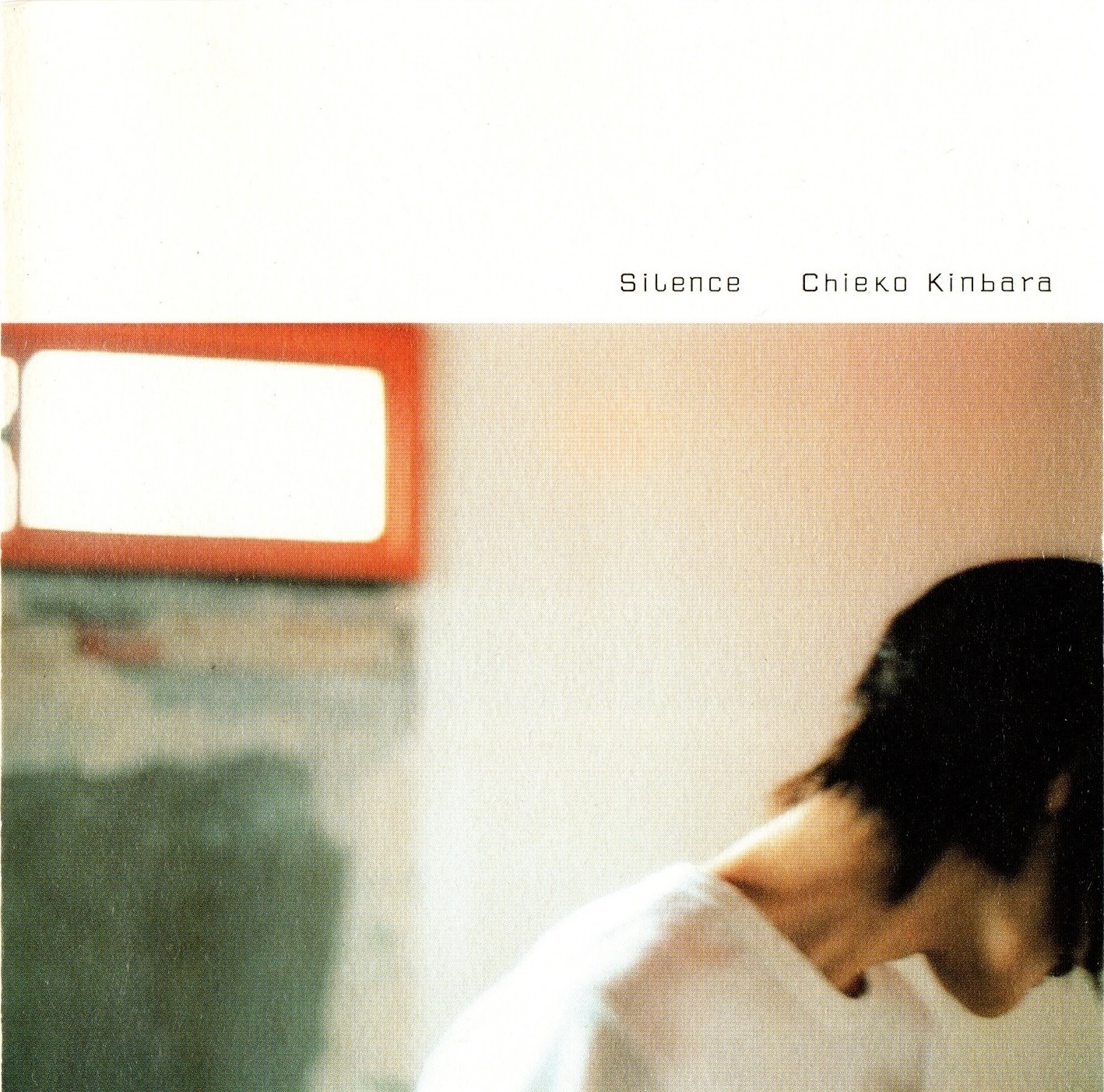
Whenever I think of something to share, I first try to think of why I want to share it. In the case of Chieko Kinbara’s Silence, it’s because it ties back to how we tend to forget the connections certain instruments have with the music we listen to. In the end, it’s through the lens of that album’s brilliant blend of strings and dance grooves that we can reaffirm how certain instruments or ideas we deem outdated aren’t, and simply need a refresher to take us somewhere new. It’s why I believe it’s worth our examination of Chieko’s journey to making its sound the base of her career.
When you first think of dance music, I wager most of us instantly conjure up dancefloors full of people moving to throbbing bass lines and thumping beats. Yet for a good chunk of recorded musical history, we forget that most of what people considered dance music was in fact played on violins, fiddles, and all sorts of other stringed instruments. If not for a brief period in the early-to-mid 1900s, when guitars, brass, and wind instruments took center stage on dancefloors and on stage via R&B, jazz, and rock, the use of strings to get you dancing was never far behind — surging forward in full force during disco’s heyday in the ’70s.

Shizuoka-born Chieko Kinbara, one could argue, took a circuitous route to end up where she landed. Before she was known in Japan as the “vocalist that doesn’t sing” there was a very young girl, a self-described tomboy, who absolutely hated taking violin lessons and performing the staid music she had to play, doing so only because of her parents’ urging.
It wouldn’t be until Chieko saw The Sound of Music playing on TV that she understood there was a whole other world and side to music, featuring strings, that could inspire different emotions and move in different musical ways. That spark of joy would lead Chieko to take her chosen instrument more seriously, eventually being recognized as a prodigious talent and taking her to Tokyo to enroll in and graduate from its storied College of Music (東京音楽大学).
In hindsight, Chieko’s time in Tokyo would land fortuitously, coinciding with the growing Shibuya-kei scene. Early sessions on records for Yoko Kanno and rock groups like Ziggy would lead her to pursue more offbeat and leftfield projects that set her further from the path her classical-music-loving parents had originally imagined for her.
In the early ’90s, Chieko would befriend composer and guitarist Yoshikazu Suo, and start a string quartet they’d dub Brew-Brew to explore pop music in its most progressive form. Originally signed to Newsic, home of Yoshio Ojima, Satsuki Shibano, and other minimalist Japanese musicians, Brew-Brew’s 1992 debut, 文化ポップ (Bunka Pop), stood out in a good way for its eclectic blend of so many genres (ambient, jazz, and more…) in a pop format. And in front of this music and band was Chieko, as lead vocalist, violinist, and part mastermind. Together with parallel thinkers in music like Adi, for a moment, those in the know knew of Brew-Brew as proponents of a different kind of alt-pop.

Chieko’s struggle would come after her time in Brew-Brew ran its course, once their major label dropped them in 1994. For a moment in the late ’90s, Chieko would find session time recording with Asuka Kaneko’s Aska Strings, performing on records by artists like Yann Tomita, Lovejoy, and others — but to create music under her own name, or even to fathom creating it, found her struggling to find anyone who’d back her straying so far from the classical umbrella. She’d rather bide her time to bind herself plodding over well-worn tracks.
It would be in those mid ’90s, when Chieko would take matters into her own hands and force the issue. She’d create her own Kinbara Strings — sometimes credited as Chieko Kinbara Strings — a string ensemble freer to work with artists who were looking for the real thing, even if their music didn’t fit into easy genres boxes. Whether working with artists like Pizzicato Five or those like Miki Nakatani, Kome Kome Club, or Monday Michiru, from alt-rock to trip-hop, there wasn’t a style Chieko couldn’t conduct and perform in.
It was during that time that musician and producer Yasushi Ide was introduced to Chieko. Yasushi came from club-scene pedigree, working in the ’80s with musicians like Seiko Ito and Takagi Kan from the Mute Beat scene, and managing or producing artists like Original Love, Bonnie Pink, and Clementine. He was as much a scene builder as those in Mondo Grosso and the Kyoto Jazz Massive. During sessions for his downtempo debut, 1995’s Lonesome Echo, Yasushi fed Chieko’s affinity for experimentation by introducing her to house music and the newer global downtempo scene, which she instantly took a liking to — she’d later say this whole world of music only opened up for her after meeting Ide. (Years on, she’d name her fourth album after Derrick May’s “Strings of Life,” the track that sparked it.)

Arguably, it wouldn’t be after Chieko’s work on Yasushi’s debut and its kin, 1998’s Purple Noon, the second of which she’d be an integral part of his Lonesome Echo Strings ensemble, that club language became something Chieko could speak in. At Yasushi’s urging, she’d sign with Japan’s club-centered Avex Trax / Cutting Edge, under a new subprint he’d create just for her: Lonesome Echo.
Recorded in three cities, Tokyo, London, and New York, with Yasushi serving as producer, what became 2001’s Silence featured heavy hitters fleshing out ideas Chieko had been quietly fomenting. In London, Everton Nelson, violinist, best known for his work with Ryuichi Sakamoto, Joni Mitchell, and others, helped Chieko create the stunning Walearic chillout “月のゆくえ” (Where the Moon Goes) and the album’s Portishead-coded title track.
In New York City, jazz greats like Lonnie Liston Smith and gospel luminaries like Bobby Wooten joined deep-house and boom bap icons like DJ Spinna to crack the code on a gorgeous reimagining of Rose Royce’s “Wishing on a Star.”
Then back home in Tokyo, soulful homegrown greats like Ken Shima, Ichiko Hashimoto, Yoko Ota, and Kenji Jammer, turned up to help create the bulk of the rest of the record, featuring in tracks like a downtempo reimagining of Lennon’s “Love” as Silence’s single. The record’s best tracks like “Quiet Dawn” firmly place Chieko’s quicksilver violin front and center, guiding the mercurial music forward as much on what sounds like a deconstruction of Massive Attack’s “Teardrop” in “Embrace”.

Although Silence seems like the starting point for what would become Chieko’s true musical calling — and one can hear in future releases like 2002’s more tropical-coded A Espera (another Ide-produced joint) and 2004’s Paradise a flowering of her spirit, so to speak — it’s always great to revisit where it all started. Back then, I believe, all it took was for Chieko to survey that her true audience wasn’t going to be found on stage or in a concert hall, far from them, but somewhere else: a place more intimate and personal (much like Ikko once did). On the club’s dancefloor, we can always find Chieko recapturing, every night, a space closer to this instrument’s truest spirit.
Leave a Reply