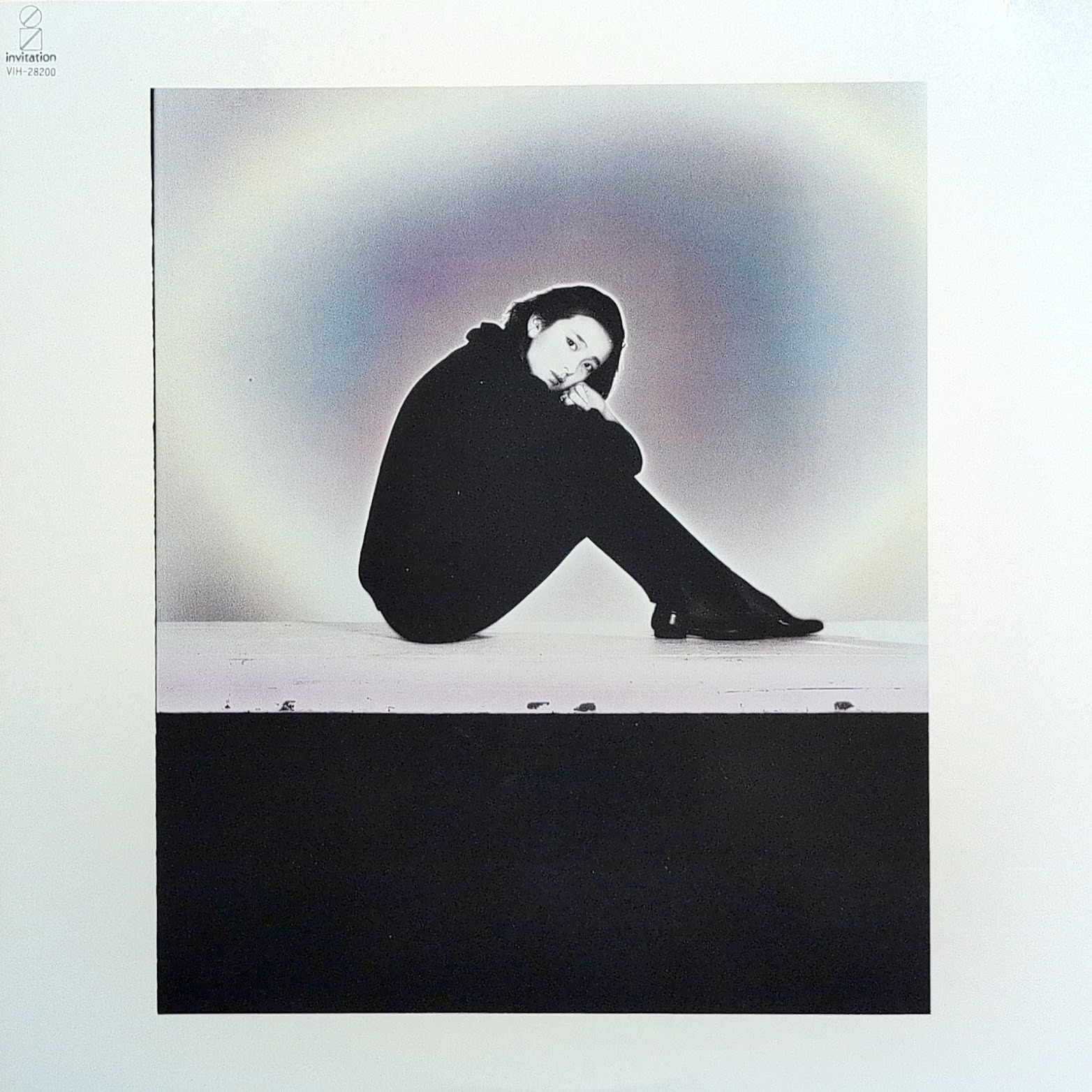
If you ask me, I do not believe that any artist must suffer for their art. For every suffering artist who produces a great work of art, there are countless others who do their best when given the freedom and space to comfortably explore their ideas. As I piece together how Naomi Akimoto arrived at her most singular work, 1984’s 水彩画 (Watercolor Painting), I am pleasantly surprised by how her story bears my belief out.
In her own words in various interviews, Naomi Akimoto likes to point out that she never considered herself the ideal candidate to become a Japanese pop idol. Born in 1963 as Yumi Harada in Matsumoto, Japan, she came from a “castle town” more known for its function as a tourist gateway to Nagano’s Japanese Alps than for its music scene.

Unlike other young girls whose first taste of music came via pop songs, Yumi’s first musical idols were jazz singers like Sarah Vaughan, equally adventurous Japanese artists like Yumi Matsutoya, and soulful folk rock groups like Off Course. Coming of age far from the sprawling metropolises flanking Japan gave her a certain degree of freedom to follow her muse.
By the time Yumi graduated from high school at age 19, she considered following her dream of becoming a jazz singer. As she recorded and sent out demos of early songs, hoping to land a record deal, the thought of becoming the next pop idol never crossed her mind. Comparing herself to her peers, she felt too young and too tall, always too different to even entertain the thought.
Yet, for all intents and purposes, record companies knew little what to do with her demos. It would take several tries before Tokyo’s Invitation record label saw something in her that others did not. In hindsight, Invitation seemed like the perfect place for Naomi to work her way into the music industry. Famously a home to rock and jazz artists like Southern All Stars, Yasuko Agawa, and the Plastics, to name a precious few, it gave artists a base to find their direction with guidance from others who had made the journey before them.
Granted the freedom to think for herself, Yumi assumed the professional name of Naomi Akimoto, choosing a name that in kanji could stretch wide across album covers. Taking the road less traveled, she felt little need to adopt a cutesy “girl-next-door” persona. Envisioning her debut and musical career as “on the job training,” Naomi rarely stopped to examine whether what little she knew, be it about being a jazz singer or exploring pursuits outside music, truly mattered. All that mattered to her was living in the moment and rolling with the 80s, so to speak. Her 1982 debut, the aptly named Rolling 80’s, would give us a taste of her embryonic vision.
Not yet old enough to drink alcohol, yet musically mature, Naomi recorded her first records with impressive names like Yasuaki Shimizu, Masanori Sasaji, and Morio Watanabe, all members of Mariah, and sang songs written by others like Tomoko Aran. Those early records span the gamut of her range, from soulful jazz singer to leftfield funky reimaginer. They helped make her a kind of hidden secret, someone just as popular with the more “discerning” jazz and rock crowd as she was with the wider audience who discovered her through her extracurricular work as a host on Fuji TV’s slightly ribald live variety show オールナイトフジ (All Night Fuji).
For all the strengths of those early records, songs like “Tennessee Waltz,” “Singin’ In The Rain,” and “Jinx” painted her as far more mature than her age. One thing her spell on オールナイトフジ (All Night Fuji) allowed her to experience was what it took to make the next step. Far from being just a television stage for homegrown artists, programs like this also introduced international artists. Madonna, for example, made the rounds performing songs like “Like A Virgin” for the very first time.
By 1984, Naomi would jettison most of the adult-leaning aesthetics of her brief career and head in a new direction. Under the influence of New Wave and more synthetic sounding music, 1984’s Poison 21 found Naomi taking greater control, penning most of its songs and collaborating with others like Hiroshi Sato and future F.O.E. member Masatoshi Nishimura, while also featuring credits from artists like Yumi Murata who were quietly navigating a similar path from jazz into something new.
The happy result of all this shape shifting was twofold. For listeners, it meant songs like “Telepathy,” which showed that Naomi could update her sound with equally impressive new contours that remained uniquely hers. For Naomi herself, it was the creation of this androgynous pop sound that allowed her to produce hit singles like “Telepathy” that felt rooted in a particular Japanese musical moment, while also leaving space for more experimental pieces like “アマゾン” (Amazon) that bridged the gap between her jazzy beginnings and a freer future.

What makes 1984’s 水彩画 (Watercolor Painting) so startling is how distinct it is from what came before or since. Released at the height of her young career, what felt revolutionary about it was just how different it was from her peers. As Daisuke Hinata related to me over email, it was “experimental, electronic, and minimalist.” It was a new style that others in her realm had not really tried before.
Before they married in 1986, Naomi and Daisuke first met on stage. A founding member of the Japanese new age band Interior, you would not necessarily peg Daisuke as someone making the transition into pop music. At first it was his hiring as a keyboardist for her live band that introduced her to him. Yet it was love, and a certain creative relationship, that drew them together. Just a few years older than Naomi, he may have been the first collaborator she worked with who seemed fully in tune with where music was heading.

Once again it was the freedom, or perhaps the lack of oversight, from her record label that allowed Naomi to convince others to let Daisuke take on a larger role in her then untitled album and push her music in yet another direction. From August through October in Tokyo’s Roppongi Hills, they recorded sessions at the now gone Studio Birdman, working most of the time by themselves. Drawing from all sorts of electronic instruments, samplers, synthesizers, and drum machines, they conjured entirely new sonic ghosts in those machines. Aside from very minor assistance from others, most notably bassist Tatsuhiko Hizawa, what became 水彩画 (Watercolor Painting) was essentially the product of the two of them working together as a duo.
When I listen to the tracks they created, songs like “ざわめき (Murmuring)” and “仮実酒 (Fruit Wine),” I am reminded of albums like Dazzle Ships from OMD. Others like “街 (City)” seem under the influence of Mancunian groups like Joy Division. The otherworldly sample-based collage “次なる時空 (The Next Space-Time)” would not sound out of place on a Berlin-era Bowie record or something from Eno. Daisuke’s favorite song from the record, the pointillistic ambient ballad “過去からの情景 (Scenes from the Past),” or its equally ethereal cousin “十六夜の月 (The Sixteenth-Night Moon),” could easily be imagined on a Durutti Column or The Gist album. Not in some dream but in our reality the Venn-diagram between Naomi’s music and the alternative and environmental music scene was closer than that of its pop scene.
In the end, what all my millennial navel-gazing is trying to impart is this: placing 水彩画 (Watercolor Painting) alongside records that were critically beloved at the time but hardly universally-known is impressive enough. To create such a personal record for a much broader audience than their influences was something else entirely. For Naomi to release such a record must have taken a certain degree of conviction and foresight. This was music meant to live suspended outside of time, critiques be damned.

One tries to place the pulsing minimalist “目覚め (Awakening)” in some kind of wider Japanese cultural context and one, or at least this writer, is left searching for words. The album’s most conventional song, “緑の花 (Green Flower),” never strays far from this leftward path. If this record was a product of love, or better yet a labor of love, Naomi found the right words and phrasing to paint her tabula rasa. And to put it bluntly, it is easy to see how Naomi Akimoto walked so that many other artists in her position could run.
Leave a Reply